
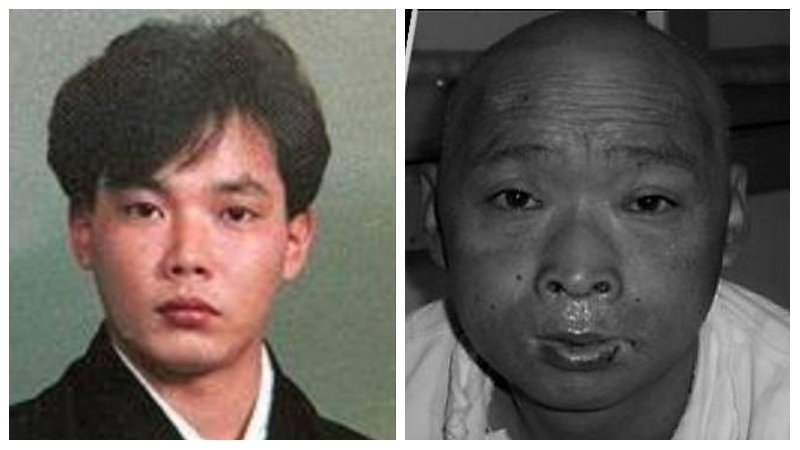
On 30 September 1999, a routine uranium-processing operation at a nuclear fuel facility in Tokaimura, Japan, became one of the country’s most serious radiation accidents. Hisashi Ouchi, a 35-year-old technician at the facility, was exposed to an extraordinarily high level of radiation when a nuclear chain reaction occurred unexpectedly.
Ouchi reportedly received a radiation dose estimated at around 17 sieverts, making his exposure one of the most severe ever documented in a civilian nuclear accident. He survived for another 83 days, undergoing intensive and experimental medical treatment before dying on 21 December 1999.
His case continues to be studied as an example of the devastating consequences that can occur when safety procedures, worker training, and organizational controls fail.
Who Was Hisashi Ouchi?
Hisashi Ouchi was a technician working for Japan Nuclear Fuel Conversion Co. (JCO), a subsidiary of Sumitomo Metal Mining. Born in 1965, he was married and had a young son.
Before the accident, Ouchi lived a relatively ordinary life and worked at the JCO facility in Tokaimura, Ibaraki Prefecture. His job involved preparing uranium fuel used for research purposes.
On the day of the accident, Ouchi was working alongside Masato Shinohara and supervisor Yutaka Yokokawa. Their task involved preparing enriched uranium for the experimental Joyo fast-breeder reactor.
What Happened at the Tokaimura Plant?
The JCO facility used a controlled process to prepare uranium fuel. Because enriched uranium can become critical under certain conditions, safety rules strictly limited the amount of material and controlled the equipment workers could use.
Engineers designed the approved procedure to prevent uranium from accumulating in a configuration that could sustain a nuclear chain reaction.
However, on 30 September 1999, the workers used an unauthorized method for mixing the uranium solution. Instead of following the approved procedure, they reportedly poured a large quantity of enriched uranium solution directly into a precipitation tank.
Approximately 16–16.6 kilograms of uranium enriched to 18.8% uranium-235 was placed into the tank. Ouchi was standing closest to the vessel while Shinohara poured the solution.
That procedure created the conditions necessary for a criticality accident.
The Moment the Nuclear Reaction Began
At approximately 10:35 a.m., the uranium solution reached criticality.
A sudden blue flash appeared in the room, associated with the intense radiation produced during the event. A self-sustaining nuclear chain reaction had begun.
Unlike a nuclear explosion, this was a criticality accident—an uncontrolled nuclear fission reaction occurring within the processing equipment.
The reaction continued intermittently for almost 20 hours. Emergency personnel eventually stopped it by draining cooling water from around the vessel and adding boric acid, which helped absorb neutrons and terminate the reaction.
Ouchi, who had been standing closest to the tank, received the highest radiation exposure.
How Much Radiation Did Ouchi Receive?
The radiation doses associated with the three workers are generally reported approximately as follows:
| Worker | Approximate Exposure |
|---|---|
| Hisashi Ouchi | ~17 Sv |
| Masato Shinohara | ~10 Sv |
| Yutaka Yokokawa | ~3 Sv |
Radiation doses of several sieverts can cause severe and potentially fatal acute radiation syndrome. At much higher doses, damage to the body’s bone marrow, gastrointestinal system, skin, and other tissues can become overwhelming.
Ouchi’s exposure was extraordinarily high and caused extensive biological damage.
Hospitalization and Experimental Treatment
After the accident, medical teams took the three workers to the National Institute of Radiological Sciences in Chiba for specialized treatment. Doctors later transferred them to the University of Tokyo Hospital.
Ouchi suffered extensive radiation-related injuries. The radiation severely damaged his blood-forming system, leaving his body with little ability to produce the white blood cells needed to fight infections.
Doctors attempted several intensive treatments, including an experimental peripheral blood stem-cell transplant using cells donated by Ouchi’s sister.
The treatment initially produced some improvement in his blood cell counts. However, the radiation damage was so extensive that his overall condition continued to deteriorate.
The Final 83 Days
Ouchi remained hospitalized for 83 days after the accident.
During this period, his body experienced progressive damage caused by the massive radiation exposure. His condition included severe skin and tissue injury, immune-system failure, infections, and damage to multiple organs.
Doctors used intensive supportive treatment in an attempt to keep him alive. He experienced serious complications involving several major organs and suffered repeated cardiac arrests.
According to accounts of the case, medical treatment continued at the request of his family. Ouchi eventually died from complications associated with the radiation exposure and multiple-organ failure at approximately 11:21 p.m. on 21 December 1999.
He was 35 years old.
What Happened to the Other Workers?
Hisashi Ouchi was not the only worker seriously injured in the Tokaimura accident.
Masato Shinohara, who had also received an extremely high radiation dose, survived for several months. Doctors used skin grafts, stem-cell treatment, and other intensive medical measures. However, his condition eventually deteriorated, and he died on 27 April 2000.
Yutaka Yokokawa, the supervisor, received a substantially lower radiation dose and survived. He was later involved in legal proceedings related to the accident and the failures surrounding the operation.
Why Did the Tokaimura Accident Happen?
Investigations identified multiple organizational and procedural failures rather than a single cause.
Among the major issues were
- Inadequate worker training
- Failure to follow approved procedures
- Unauthorized changes to the uranium-processing method
- Production and scheduling pressure
- Weak criticality-safety controls
- Insufficient regulatory oversight
The workers had used procedures that were not part of the officially approved safety process. The incident demonstrated how dangerous it can be when established nuclear-safety procedures are replaced by informal shortcuts.
Legal and Regulatory Consequences
The Tokaimura accident resulted in significant legal and regulatory consequences for JCO.
The company lost authorization for the affected operation, while several employees and company officials faced criminal proceedings.
Compensation was also provided to victims, their families, and people affected by the accident.
The incident prompted Japan to strengthen its approach to nuclear safety, emergency preparedness, worker training, and regulatory oversight.
What About the Photos of Hisashi Ouchi?
Searching online for “Hisashi Ouchi photos” can produce disturbing hospital images that are sometimes claimed to show Ouchi.
However, the authenticity and provenance of many images circulating online are difficult to establish. Some photographs shared on websites and social media have been incorrectly identified as images of Ouchi.
For that reason, responsible coverage of the Tokaimura accident should avoid presenting unverified photographs as authentic evidence.
The documented medical history, official investigations, and reliable historical accounts provide a much stronger basis for understanding what happened than graphic images circulating online.
The Tokaimura Accident’s Legacy
The Tokaimura criticality accident was classified as Level 4 on the International Nuclear and Radiological Event Scale (INES).
It became one of the most significant nuclear-safety incidents in Japan’s civilian nuclear industry and highlighted the importance of strict criticality controls.
The accident also demonstrated that nuclear safety depends on more than sophisticated equipment. Worker training, management decisions, regulatory supervision, and a strong safety culture are all essential.
The lessons from Tokaimura continued to be discussed in Japan’s nuclear-safety framework, including during broader debates about nuclear risk following the 2011 Fukushima Daiichi accident.
Key Timeline
| Date | Event |
|---|---|
| 30 September 1999 | A criticality accident occurs at the JCO facility. |
| 30 September 1999 | Ouchi and two other workers receive severe radiation exposure. |
| Early October 1999 | Experimental stem-cell treatment is attempted. |
| Late November 1999 | Ouchi suffers serious cardiac complications |
| 21 December 1999 | Hisashi Ouchi dies 83 days after the accident. |
| 27 April 2000 | Masato Shinohara dies. |
| 2000 onward | Investigations, prosecutions, compensation, and safety reforms continue. |
| 2011–2026 | Tokaimura remains an important case in discussions of nuclear safety. |
What Hisashi Ouchi’s Case Teaches Us
People remember the story of Hisashi Ouchi not simply because of the extraordinary radiation exposure he experienced, but because the accident revealed how multiple safety failures can combine to produce a catastrophic result.
The Tokaimura incident involved unauthorized procedures, inadequate safety controls, insufficient training, and weaknesses in oversight. These factors transformed a routine industrial operation into a life-threatening nuclear accident.
More than two decades later, the case remains a powerful reminder of why nuclear facilities require strict procedures, continuous training, effective supervision, and a safety culture in which production demands never override established safety rules.
Conclusion
Hisashi Ouchi’s death remains one of the most tragic episodes in the history of radiation accidents. The Tokaimura disaster was not simply a story of extreme radiation exposure; it was also a case study in how preventable procedural and organizational failures can have devastating consequences.
By 2026, the accident continues to be referenced in discussions of nuclear safety and emergency preparedness. Its lasting lesson is straightforward: in high-risk industries, safety procedures exist for a reason, and even seemingly small deviations can have consequences far beyond the workplace.
Please visit my site, Kaz Grow Mag, for more details.