
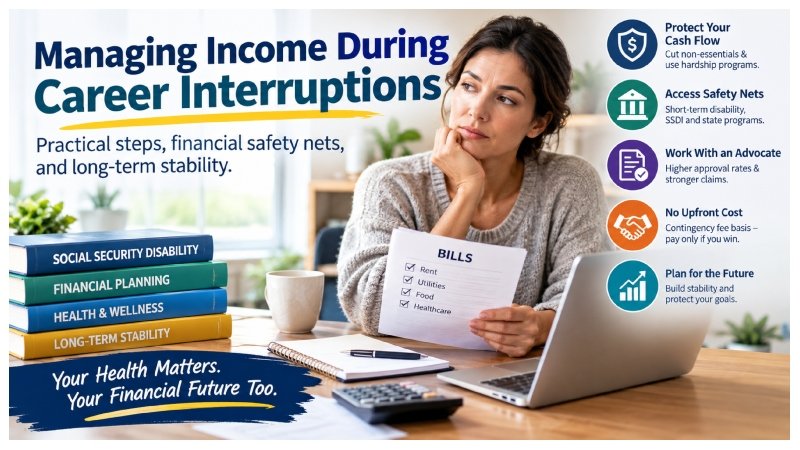
A sudden health issue, injury, or chronic illness can bring a thriving career to an immediate standstill. When regular paychecks stop coming in, the financial strain can feel overwhelming almost overnight. Bills keep piling up, medical costs quickly mount, and the anxiety of not knowing when you can return to work takes a heavy toll.
Managing cash flow during a major career pause requires a clear, practical plan. As outlined in guidance on disability application myths by the Huntington’s Disease Society of America, many people mistakenly assume that simply having a medical diagnosis guarantees quick support or that the government tracks down evidence on their behalf. Navigating this transition successfully means separating facts from misconceptions, protecting your day to day budget, and learning how to tap into the financial safety nets you have paid into throughout your working years.
Immediate Steps to Protect Your Household Cash Flow
When your income drops without warning, quick adjustments make all the difference. Start by separating essential expenses like housing, utilities, food, and basic healthcare from non-essential spending. Contact lenders and credit card issuers right away to ask about hardship programs, which can temporarily pause payments or reduce interest rates without hurting your credit standing.
At the same time, look into immediate gap coverage. Check if your employer offers short-term disability policies, look into state disability funds, or evaluate any private income-replacement coverage you might carry. Every small buffer buys you time to figure out your next moves without draining your emergency savings all at once.
Understanding Government Safety Nets and Disability Insurance
For health conditions that take you out of work for a year or longer, federal programs like Social Security Disability Insurance (SSDI) exist to replace a portion of your lost earnings. Because SSDI is funded directly through your FICA payroll taxes, it is an earned benefit designed to keep workers afloat when long-term health crises strike.
However, counting on these benefits requires patience and realistic expectations. The Social Security Administration denies roughly 70 percent of initial disability applications, usually due to incomplete medical paperwork or technical filing errors. Knowing that an initial rejection is common helps you plan your finances for a longer timeline rather than relying on an immediate approval to pay next month’s rent.
Overcoming Delays and Protecting Your Owed Benefits
Navigating federal bureaucracy while dealing with a serious medical issue is exhausting. The agency looks for specific clinical proof, detailed doctor statements, and functional tests that prove you cannot maintain full-time employment. If your file misses these precise legal marks, your claim stalls.
This is why many applicants choose to partner with an experienced advocate. Having a Bay Area disability attorney in your corner levels the playing field, making sure your medical evidence is organized properly, deadlines are met, and your claim is presented clearly right from the start. Data from the U.S. Government Accountability Office shows that claimants who work with representatives are approved at a rate nearly three times higher than those who apply alone, helping protect the income support they genuinely need.
How Representation Works When Cash Flow Is Tight
Many people in the Bay Area assume hiring an advocate is out of the question when they have zero income coming in. Fortunately, disability representation operates on a contingency fee setup, meaning there are no upfront retainers or out-of-pocket hourly bills to worry about.
If you do not win, you owe no attorney fees. This structure allows workers to pursue the financial support they deserve without putting their household deeper into debt.
Building Long-Term Financial Stability After a Career Break
Surviving an unexpected break in your career comes down to staying proactive on multiple fronts. Balancing daily budgeting with the patient and persistent pursuit of earned safety nets gives you room to breathe while focusing on your health.
Whether you eventually transition back into modified work or rely on permanent benefits, taking control of your financial options early keeps you grounded. Treating an initial denial as just a step in the process rather than a final roadblock ensures you recover the income support you worked hard to build.